Thursday, July 28, 2011

Shining Light On The Workings Of Cells

http://www.npr.org/2011/07/28/138784047/shining-light-literally-on-the-workings-of-cells?sc=fb&cc=fp

Scientists would like to know more about how cells work. But seeing what's happening inside a cell isn't easy. It's dark in there, and even if you shine a light, many of the critical chemical reactions are invisible.
Now, a team of researchers has found a way to reveal the invisible by attaching what amounts to a reflective tag to a chemical called RNA, a close relative of DNA. Molecules made of RNA have a variety of important jobs inside cells and frequently, doing those jobs requires the RNA to shuttle from one part of the cell to another.
Jaffrey says being able to see how the RNA is moving inside cells should answer a lot of important questions about what the chunks of RNA inside cells are up to, like: "When do they move, in response to what signals in cells? And how is their movement affected in diseases?" This information "will give us more insight into how those RNAs are linked to the disease process," Jaffrey says.
Lighting up cells.

Modular Structure Of Proteins Allows Evolution To Move Forward

http://www.sciencedaily.com/releases/2011/07/110726190059.htm
Changes in a short protein domain can alter a whole signaling network involved in organ development – this is the key result of a comparative study of the development of the egg laying organ in two species of nematodes. However, the outward appearance of the organ remains the same in both species. The study provides support for the theory of developmental systems drift – a theory maintaining that, over the course of evolution, analogous organs of different species can retain the same shape and function while the regulative mechanisms underlying their development can change considerably.
Proteins can act differently while organs look the same.

Newly Discovered Gene Sheds Light On Evolution

http://www.sciencedaily.com/releases/2011/07/110725111531.htm

A chance discovery of a genetic mutation in wild barley that grows in Israel's Judean Desert, in the course of a doctoral study at the University of Haifa, has led to an international study deciphering evolution of life on land. The study has been published in the journal PNAS.
"Life on Earth began in the water, and in order for plants to rise above water to live on land, they had to develop a cuticle membrane that would protect them from uncontrolled evaporation and dehydration. "In our study we discovered a completely new gene that along with other genes contributes to the formation of this cuticle,"
The Chinese doctoral student Guoxiong Chen found a mutation of wild barley in the Judean Desert that was significantly smaller than regular wild barley. It was found that this mutation causes an abnormal increase in water loss because of a disruption in the production of the plant's cutin that is secreted from the epidermal cells and is a component in the plant's cuticle that reduces water loss and prevents the plant's dehydration.
A critical step in plant evolution discovered.

Tuesday, July 26, 2011

Biology's New Supermodel

http://the-scientist.com/2011/07/20/biology’s-new-supermodel/
Move over mice. Human induced pluripotent stem (iPS) cells are making strides to become the next best thing in translational research—disease-specific human cells grown in a dish. Using a variety of approaches, researchers have generated stem cells from mature adult cells of disease-afflicted patients and subsequently differentiated them into the various tissue types involved in the disease.
The strategy is proving particularly valuable for neurodegenerative diseases, in which it is not easy to safely and ethically extract affected cells of the brain. Instead, researchers can remove more accessible cells, such as those of the skin, regress them into a pluripotent state, and then re-differentiate them into neurons. Furthermore, iPS cells can be expanded in culture and/or frozen for years, providing an unlimited supply of cells from a single patient that can be used to create any cell types needed for the study of a particular disease, now or in the future.
Seems ethical and effective.

Monday, July 25, 2011

Stop The First Legal Bear Hunt In Nevada History

http://ida.convio.net/site/MessageViewer/&printer_friendly=1?em_id=19641.0&dlv_id=22001
Black bears have been protected in the state of Nevada since 1929. Now, for the first time in Nevada history, the Nevada Wildlife Commission has adopted a regulation to establish a bear hunt in the Lake Tahoe Basin. The bear hunt is scheduled to begin on August 20, 2011 and continue through December 31, 2011.
The Nevada Department of Wildlife (NDOW) has not proven there are sufficient numbers of bears to support a hunt. Their own management plan states the bear population has been stable at around 200-300 bears since 1900. The population is not growing, but bear habitat is being continually degraded by residential development, drought and fire. This proposed hunt threatens the bear population.
Please contact the NWC immediately. We have provided a sample letter below, which you can copy-and-paste into an e-mail as is, or re-write to better reflect your thoughts.
Please send your email to: Suzanne Scourby, Wildlife Commission Executive Assistant, sscourby@ndow.org.
Please Help! Their population is in danger!

Extinction Rider

http://www.huffingtonpost.com/jamie-rappaport-clark/extinction-rider-puts-us-_b_907321.html
Next week, the U.S. House of Representatives plans to pass an ill-conceived budget bill for the Interior Department that would paralyze our nation's programs for protecting imperiled plants and animals. A provision included by Rep. Mike Simpson (R-Idaho), and approved by the Appropriations Committee on July 12, would block crucial life-saving protections for more than 260 "candidate species" currently awaiting listing decisions under the Endangered Species Act.
The Extinction Rider, if passed, would prevent the U.S. Fish and Wildlife Service from taking further action to save not only the wolverine and the lesser prairie chicken, but also the Pacific walrus, the red knot shorebird, the New England cottontail rabbit, the Sonoran desert tortoise, and hundreds of other species that need our help to survive.
This bill must be stopped!

Sunday, July 24, 2011

Collaboration Encourages Equal Sharing in Children but Not in Chimpanzees

http://www.sciencedaily.com/releases/2011/07/110720142007.htm
Children as young as three years of age share toy rewards equally with a peer, but only when both collaborated in order to gain them. Katharina Hamann with an international team of researchers from the Max Planck Institute for Evolutionary Anthropology in Leipzig, Germany, Harvard University and the Michigan State University found that sharing in children that young is a pure collaborative phenomenon: when kids received rewards not cooperatively but as a windfall, or worked individually next to one another, they kept the majority of toys for themselves. One of humans' closest living relatives, chimpanzees, did not show this connection between sharing resources and collaborative efforts
Kids seem to know whats fair. If only more adults knew.

Surprisingly Few Genes Govern Evolution

http://www.sciencedaily.com/releases/2011/07/110721142416.htm
For 150 years scientists have been trying to explain convergent evolution. One of the best-known examples of this is how poisonous butterflies from different species evolve to mimic each other's color patterns -- in effect joining forces to warn predators, "Don't eat us," while spreading the cost of this lesson.
Now an international team of researchers led by Robert Reed, UC Irvine assistant professor of ecology & evolutionary biology, has solved part of the mystery by identifying a single gene called optix responsible for red wing color patterns in a wide variety of passion vine butterfly species. The result of 10 years of work, the finding is detailed in a paper that appears online July 21 in the journal Science.
"This is our first peek into how mimicry and convergent evolution happen at a genetic level," Reed said. "We discovered that the same gene controls the evolution of red color patterns across remotely related butterflies.
"This is in line with emerging evidence from various animal species that evolution generally is governed by a relatively small number of genes. Out of the tens of thousands in a typical genome, it seems that only a handful tend to drive major evolutionary change over and over again."
Evolution works with what it has, and sometimes a little can go a long way.

Thursday, July 21, 2011

Animal Testing for Household products to be Banned in the UK

http://www.ecorazzi.com/2011/07/19/banned-in-the-uk-animal-testing-for-household-products/
Animal testing goes on all over the world. It is a sad fact that many are trying to eradicate. In Britian, the use of animal testing for cosmetics has been banned since 2008 and now in 2011 the country is finally taking steps to ban animal testing for household products.
According to the Daily Mail, animal testing for household products will be subject to the same rules that the cosmetic industry has to abide by. Lynne Featherstone, Home Office minister, said of the ban, “We believe it is possible to sell household products without inflicting pain and suffering on animals, and it is unacceptable that testing in this area continues.”
Good news!

New Particle Discovered

http://www.sciencedaily.com/releases/2011/07/110720162045.htm
Scientists of the CDF collaboration at the Department of Energy's Fermi National Accelerator Laboratory announced the observation of a new particle, the neutral Xi-sub-b (Ξb0). This particle contains three quarks: a strange quark, an up quark and a bottom quark (s-u-b). While its existence was predicted by the Standard Model, the observation of the neutral Xi-sub-b is significant because it strengthens our understanding of how quarks form matter.
The neutral Xi-sub-b is the latest entry in the periodic table of baryons. Baryons are particles formed of three quarks, the most common examples being the proton (two up quarks and a down quark) and the neutron (two down quarks and an up quark). The neutral Xi-sub-b belongs to the family of bottom baryons, which are about six times heavier than the proton and neutron because they all contain a heavy bottom quark. The particles are produced only in high-energy collisions, and are rare and very difficult to observe.
Interesting.

Rainbow Toad Rediscovered

http://www.care2.com/greenliving/rainbow-toad-rediscovered-after-87-years.html
Conservation International researchers had re-discovered the Sambas stream toad (aka Borneo rainbow toad). It was last seen in the early 1920s, there was not much information about it. CI had placed the MIA toad on their list of top ten most-wanted frogs. Their researchers have been searching for the very rare amphibians to find out if they still exist in the wild. Very fortunately they met with success and found some in area of Western Sarawak on night searches at elevation. They wound up finding a total of three of the tiny creatures. So they now have found two of the ten most wanted frogs. A CI official said, “It is good to know that nature can surprise us when we are close to giving up hope, especially amidst our planet’s escalating extinction crisis.”
Finally found again after 87 years. Looks well worth the search.

Wednesday, July 20, 2011

Molecular Soup Acts Like A Brain

http://www.sciencedaily.com/releases/2011/07/110720142501.htm
Researchers at the California Institute of Technology (Caltech) have now taken a major step toward creating artificial intelligence -- not in a robot or a silicon chip, but in a test tube. The researchers are the first to have made an artificial neural network out of DNA, creating a circuit of interacting molecules that can recall memories based on incomplete patterns, just as a brain can.
Consisting of four artificial neurons made from 112 distinct DNA strands, the researchers' neural network plays a mind-reading game in which it tries to identify a mystery scientist. The researchers "trained" the neural network to "know" four scientists, whose identities are each represented by a specific, unique set of answers to four yes-or-no questions, such as whether the scientist was British.
After thinking of a scientist, a human player provides an incomplete subset of answers that partially identifies the scientist. The player then conveys those clues to the network by dropping DNA strands that correspond to those answers into the test tube. Communicating via fluorescent signals, the network then identifies which scientist the player has in mind. Or, the network can "say" that it has insufficient information to pick just one of the scientists in its memory or that the clues contradict what it has remembered. The researchers played this game with the network using 27 different ways of answering the questions (out of 81 total combinations), and it responded correctly each time.
So chemicals that can think, I wonder how advanced this could become.

Animals May No Longer Be Used In Botox Testing

http://jezebel.com/5822172/new-technique-will-save-animals-from-botox-testing
Scientists have developed a method of testing Botox on cells in a petri dish rather than live animals. And this could be part of a larger move away from animal testing.
Botox producer Allergan Inc. developed the test over the last 10 years, and the FDA just approved it last month. If it's approved in other countries too, it could reduce Allergan's dependence on animal testing by 95%.
And Botox isn't the only drug scientists hope to begin testing in a dish rather than on a living thing — one molecular biologist is developing a way to test drugs on liver cells grown in special tunnels, while another team is working on a technique to test for birth defects on stem cells.
Testing on cells in dishes isn't perfect — in some cases, scientists may need to follow up with animal tests to make sure that what's safe for isolated cells doesn't harm a living organism. But the new techniques could provide effective first-line testing, and accomplish something everybody wants: reducing the number of animals that die so that humans can live.
This is a great step towards the end of animal experimentation. Let's hope more like this come soon.

Fish Able to See Above and Below Water

http://www.scientificamerican.com/podcast/episode.cfm?id=bifocal-fish-sees-differently-above-11-07-20&WT.mc_id=SA_facebook
A fish (Anableps anableps) that keeps its eyes half submerged has specially adapted pupils and retinas to see clearly both above and below the water. It lives in the brackish waters of mangrove swamps in central and South America, and hunts for food at the water's surface... its bulging eyes submerged halfway. Each eye has two pupils, one above water, one below. And each pupil sends incoming visual info to a different side of the fish's retina. Cones in each half of the retina are adapted to produce different light-filtering pigments. So cones hit by underwater rays are primed to sense longer-wavelength yellow light. Cones hit by daylight are sensitive to shorter-wavelength green light. The entire arrangement makes it easy for this bifocal fish to spot a tasty bug flying above the water, or a bit of algae below.
Wouldn't it be interesting to have two pupils for each eye? Being able to see above and below water at the same time? These kinds of adaptations seem rare in the animal kingdom.

Organic Farmer Could Face Jail Time

http://www.thepetitionsite.com/takeaction/822/657/908/
In the last ten years, Canadian man Dirk Becker has transformed his property from a gravel-strewn wasteland to a self-sufficient organic farm. Now, the council of Lantzville, British Columbia has ordered him to cease all agricultural activity or face jail time.
Although Dirk's neighborhood is residentially zoned, there are only four other houses on his country road. With horses and cows in pastures just down the street from him, Dirk's one-acre farm is not out of place. Even so, the city of Lantzville has deemed that his well-maintained land is "unsightly." If Dirk doesn't destroy his farm, he could face up to six months in jail.
Every year, land prices in British Columbia have increased, preventing new farmers from acquiring property. Only 5% of the food on Vancouver Island is grown domestically. Lantzville's attempts to destroy Dirk's farm are economically and environmentally irresponsible. Demand that Lantzville redefine the zoning laws to fit urban farming today!
This is absolutely ridiculous. His land is well maintained, how can that be considered unsightly? How does that not fit in with the cow pastures? And he is residentially zoned. Did the county really prefer the wasteland that it was before? Being self sufficient is a good thing, not having to rely on others. To think of all the work he put into it could now go to waste is a shame. Facing jail time for growing vegetables is unbelievable. Something else must be going on that the county is not telling us. Maybe the country is under the influence of private special influence groups who want the only legal way to get vegetables is through corporate mega-farms. I'm not sure. This seems too weird. I hope somehow he can keep his farm and not go to jail. Dirk has my support.

Tuesday, July 19, 2011

Exercise Linked to Healthier Mind In Old-age

http://www.sciencedaily.com/releases/2011/07/110719101755.htm
Engaging in regular physical activity is associated with less decline in cognitive function in older adults, according to two studies published Online First by Archives of Internal Medicine, one of the JAMA/Archives journals.
The researchers analyzed data to correlate cognitive score changes with total physical activity and energy expenditure from walking. As participants' energy expenditure increased, the rate of cognitive decline decreased. The amount of exercise equivalent to a brisk, 30-minute walk every day was associated with lower risk of cognitive impairment.
If confirmed in future studies, physical activity recommendations could yield substantial public health benefits given the growing number of older persons with vascular conditions and their high risk of cognitive impairment.

Cannabis Has No Long-term Effect On Cognitive Performance

http://healthland.time.com/2011/07/19/study-marijuana-not-linked-with-long-term-cognitive-impairment/
The idea that “marijuana makes you dumb” has long been embodied in the stereotype of the slow, stupid stoner, seen in numerous Hollywood movies and TV comedies and going unquestioned by much of American culture. But a new study says no: the researchers followed nearly 2,000 young Australian adults for eight years and found that marijuana has little long-term effect on learning and memory— and any cognitive damage that does occur as a result of cannabis use is reversible.

When the results were at last tabulated, researchers found that there were large initial differences between the groups, with the current marijuana smokers performing worse on tests that required them to recall lists of words after various periods of time or remember numbers in the reverse order from the one in which they were presented.

However, when the investigators controlled for factors like education and gender, almost all of these differences disappeared.  The lower education levels of the pot smokers — and their greater likelihood of being male — had made it look like marijuana had significantly affected their intelligence.  In fact, men simply tend to do worse than women on tests of verbal intelligence, while women generally underperform on math tests. The relative weighting of the tests made the impact of pot  look worse than it was. They found that heavy users who had quit by the end of the study were no longer distinguishable on this measure from those who had never used.

T]he adverse impacts of cannabis use on cognitive functions either appear to be related to pre-existing factors or are reversible in this community cohort even after potentially extended periods of use.
Turns out generally stoners aren't stupid and any adverse effects can be reversed. Looks like they aren't putting themselves at risk of anything.


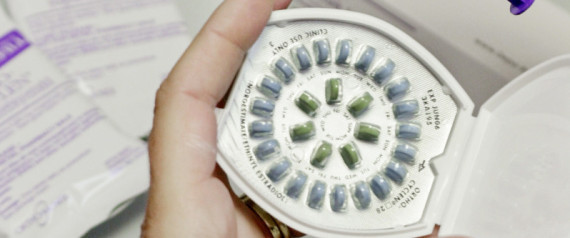
Health Insurance and Birth Control

http://www.huffingtonpost.com/2011/07/19/birth-control-free-under-all-health-insurance_n_903732.html
A highly influential panel of medical experts recommended to the U.S. Department of Health on Tuesday that all health insurance plans be legally required to offer free birth control to patients. In addition to covering birth control, the IOM suggested in its report that health insurers pay for HPV testing, contraceptive and lactation counseling, HIV screening and breast-feeding equipment. Making family-planning services available at no cost will help millions of women prevent unintended pregnancy and thereby reduce the need for abortion
Nancy Keenan, president of NARAL Pro-Choice America added she was "confident that the Obama administration will adopt the IOM's science-based recommendation and thus make affordability of contraception a reality for all women."
I hope the Obama Administration does adopt the reccomendation. This would help many women across the country.

Oregon House passes 'shark fin soup' ban

http://www.katu.com/news/politics/121027329.html
The Oregon House on Friday unanimously passed a bill that would ban the sale of shark fins used in a traditional Chinese soup. With shark fin soup commanding prices that approach $200 a bowl in major cities around the world, it is important that our state join West Coast and international efforts intended to shut down the commercial trading of shark fins. House Bill 2838 now goes to the Senate. The bill prohibits the possession and distribution of shark fins and carries a fine of up to $720 for violations. It makes an exception for spiny dogfish, a small shark that accounts for 300,000 pounds in landings by commercial fishermen each year. Sport fishermen with a valid license are not affected. Whit Sheard of the marine conservation group Oceana said that winning a ban in Oregon and other West Coast states is part of a campaign to build international support for protecting the tens of millions of sharks killed each year for soup, most of which is consumed in Asia. Fishermen cut the fins from sharks, then throw them alive back in the ocean, where they starve to death or suffocate because they can no longer swim, conservation groups say. Environmentalists warn that sharks are slow to reproduce, serve a key function as a top predator in ocean ecosystems, and their survival is threatened by the demand for their fins, which is likely to grow as the Chinese economy continues to improve.
I hope this passes the senate too. Steps like this for marine conservation are really crucial.

Too Much Meat Linked to Disease

http://www.huffingtonpost.com/2011/07/18/cut-back-on-meat-new-repo_n_901554.html
A new report released Monday claims the science is clear: Eating too much meat is bad for your health. The report, which weaves together statistics from various earlier studies, allows that meat can be an important source of protein and vitamins when eaten in moderation. The report cites data from the United Nations Food and Agriculture Organization suggesting that Americans consume almost 60 percent more meat than their European counterparts, and four times more than in many developing countries. And much of that meat is either red or processed.
A 2009 report from the National Cancer Institute found that people who ate the most red meat -- which can have high levels of cholesterol-rising saturated fat -- were 27 percent more likely to die of heart disease. That same report also found serious meat eaters were 20 percent more likely to die of cancer than those who consumed the least amount of meat.
American Cancer Institute, cautioned that the link between high meat consumption and a broad range of cancers -- including prostate and pancreatic -- is possible, but not entirely clear. However, she said there is a consistent association between red and processed meats and a risk of colon cancer. Scientists have hypothesized that the nitrates in processed meats are a possible culprit, as are the chemicals formed when red meat is cooked at high temperatures.
"What people always ask next, is 'what is the magic number?' in terms of servings of meat to aim for," McCullough said. "Unfortunately, there is no real magic number. I generally say that if you currently eat red meat, you should cut back by half.
The American Institute for Cancer Research and the American Dietetic Association recommend limiting red meat consumption to 18 ounces per week -- a little more than a pound
If possible, reduce you meat intake or cut it out entirely.

Monday, July 18, 2011

Borders Shutting Down

http://www.sfgate.com/cgi-bin/article.cgi?f=/c/a/2011/07/18/BUKT1KBRGO.DTL&type=business
Borders, the country's second-largest bookstore chain, which not so long ago had more than 600 stores nationwide, threw in the towel Monday and announced it was going into liquidation. Gone, beginning in less than a week, will be the 399 stores left over after its Chapter 11 filing in February. Approximately 10,700 employees nationwide will be let go.

It is sad to see a bookstore go out of business. While it was not my favorite, it still had a descent selection. I remember my dad playing chess there while I was young, and a few nights listening to live music near their little cafe. I remember when it had a great CD selection years ago.  Borders had some books there that I've never seen anywhere else. It will be missed. To think that now people will have less bookstores to go to is a dissapointing thought.

Wasp Uses Ladybug to Protect Larvae

http://www.sciencedaily.com/releases/2011/07/110718085229.htm
The parasitic wasp Dinocampus coccinellae is no fool. It controls a ladybug, lays an egg in its abdomen and turns it into the bodyguard of its cocoon. This surprising host-parasite manipulation has been observed and analyzed by researchers from the Laboratoire Maladies Infectieuses et Vecteurs: Ecologie, Génétique, Evolution et Contrôle (CNRS/IRD/Université Montpellier 1) and the Université de Montréal.
Females deposit a single egg in the abdomen of their host, the ladybug, and during larval development (around twenty days) the parasite feeds on the host's tissues. Then, the wasp larva breaks out through the ladybug's abdomen, without killing it, and begins spinning a cocoon between the ladybug's legs. The ladybug, partially paralyzed, is forced to stand guard over the cocoon.
Interesting how other creatures can manipulate each other.

Lab Grown Meat

http://www.sciencedaily.com/releases/2011/07/110714101036.htm

'Cultured meat could potentially be produced with up to 96% lower greenhouse gas emissions, 45% less energy, 99% lower land use, and 96% lower water use than conventional meat.'
 'our research shows that cultured meat could be part of the solution to feeding the world's growing population and at the same time cutting emissions and saving both energy and water. Simply put, cultured meat is, potentially, a much more efficient and environmentally-friendly way of putting meat on the table.'
I certainly hope this becomes more popular. The fact that it also doesn't involve harming animals is a plus.

Striped Rabbit


          http://news.bbc.co.uk/2/hi/science/nature/422674.stm
A new species of striped rabbit has been found in the mountain forests of Laos and Vietnam. The furry, red-bottomed creatures have black and brown stripes across their face and back. They resemble the endangered Sumatran striped rabbit, the only other known striped rabbit.
 I've never seen a striped rabbit before. They must be very uncommon.

Sunday, July 17, 2011

Photosynthesis and Phycobilins


I was reading Carl Sagan's book The Dragons of Eden. In the third chapter I learned something very interesting. Green plant photosynthesis utilizes light in the red and violet parts of the the solar spectrum which break down water, build carbohydrates and other things. But the sun gives off more light in the yellow and green parts of the spectrum than in the red or violet. Plants just using chlorophyl as their only photosynthetic pigment are rejecting light where its most plentiful. There are however plants that have adapted and adjusted themselves to meet this inefficiency. Other pigments which reflect red light and absorb yellow and green light, such as carotenoids and phycobilins have evolved. These plants havent discarded chlorophyl for these new chemicals, they use both. These plants pass along the energy they acquire from the green and yellow light to the chlophyl pigment that, even though has not absorbed the light, is still instrumental for bridging the gap between light and chemistry in photosynthesis. These plants are more efficient.

I find it strange that only a few plants and red algae have developed these more efficient light-absorbing chemicals. Why aren't these pigments not more widespread throughout the plant kingdom? Maybe the rest of the plants only need what is good enough and have no selective pressure to change.

Hemp Nutrition

 Most people when they hear about hemp they think of the psychoactive part of the Cannabis plant. But there is much more than that. The hemp seeds are very nutritious. They contain all the necessary amino acids to form a complete protein. For 3 tbs there are 11 grams of protein, that amount also contains 16% of your daily iron intake, 48% phosphorus, 48% magnesium and 23% Zinc. There are also 7.5 grams of Omega-6 LA, 3.0 grams of Omega-3 ALA, 0.6 grams of Super Omega-6 GLA and 0.3 grams of Super Omega-3 SDA. That with 174 calories and 1 gram of dietary fiber. The protein from hemp seeds is supposed to be very digestable. Unlike soy, hemp seeds do not contain phytic acid which is an anti-nutrient that prevents the absorbtion of minerals. They are rich in polyunsaturated fats(the kind that are good for you). Being a plant product there is no cholestorol.

They have a great nutty taste. They're so small that they can be added to smoothies, cereal and other foods for a nutrition boost. When I was running I used a hempseed protein powder as a recovery drink and it worked really well. You will find no THC in the food at all so you won't get high and you can pass a drug test.

Saturday, July 16, 2011

The Eye and Vitamin C

An article from science daily: http://www.sciencedaily.com/releases/2011/07/110715135353.htm

Nerve cells in the eye require vitamin C in order to function properly -- a surprising discovery that may mean vitamin C is required elsewhere in the brain for its proper functioning, according to a study by scientists at Oregon Health & Science University recently published in the Journal of Neuroscience.
I guess Vitamin C is more important than I realised.

Holology


I thought this website was interesting:

Holology comes from the idea that the way things are right now are no longer desirable, that they should be brought to an end. The goal it to provide a positive vision for the future offering practical conclusions and proposals for social solutions. Holology recognizes that there is no such as a perfect and permanent system, but what should be achieved is something with functional utility, built upon hypothesis and leading to experiment leading to implemented verifiable conclusions. Holology recognizes life is a work in progress constantly changing and adapting to changing environments.

Getting Organized

So lately I've been forgetting to do certain things or doing them later than I should be doing. Like I'll forget to eat breakfast, take out the recycling, take my medication, do guitar practice, take out the compost, clean the rabbit cage, etc. So I need to organize a weekly schedule for myself. Either I will type something out and make it like a poster or use Google calendar. It would really help me out. Escpecially this fall when school starts with all the homework. It would provide a routine to follow which makes managing responsibilities easier and more efficient.

Dry Life

An interesting article from National Geographic: http://newswatch.nationalgeographic.com/2011/07/13/the-dry-edge-of-life-studying-martians-in-chile/


In the Atacama desert astrobiologists were looking for life in the driest place in the world. The average annual rainfall is one millimeter, and decades can go by between rain events. Nothing seems to live there including animals, plants and lichen. The place seems so unchanged that it seems comparable to the surface of Mars. It turns out that on the ground there are small rock formations made of halite and these rocks are filled with a novel species of photosynthetic bacteria. These rocks absorb moisture from the atmosphere and small pockets of liquid brine form. And because because halite is translucent, it allows sunlight in for photosynthesis while blocking harmful UV rays. The researchers say this may help them when looking for life on Mars.

While I'm not sure wether this will help looking for like on Mars, it is an interesting discovery of the places life can be found.

Fish Uses Tool

An article from National Geographic shows pictures for the first time ever of a fish using a tool. It repeatedly bashes shelfish against a rock to crack its shell to get the meat inside. Fish are smarter than I thought.

http://news.nationalgeographic.com/news/2011/07/pictures/110713-tool-using-fish-science-tuskfish-australia-use-tools/?source=link_fb20110716wildfishusestool

Friday, July 15, 2011

The Job I Want

I would like to start out with something simple first. I tried applying to GoodWill but they said they only hired those 17 or over. So I may apply next year and see. Since I'm going to high school It seems like the only times I would have to go would be part time or on thr weekends. It seems like it would be simple for me. Being sorting and labeling items, asking people if they need help, and working the cash register. Although I'd have to make sure and get there on time each day and look presentable. New Seasons also seems like a good place to work. Stocking the shelves and preparing food. I would possibly be able to get store discounts on food, and they have good food. Generally I want to work somewhere either local or somewhere interesting. Not a corporation where I'm just some faceless number working minimum wage like Subway or Target. I'd like a real job where I'm treated like a person instead of a "cog in the machine". I want to feel like I'm doing something important and being a part the community, not making some boss high up somewhere rich while following orders.

After working at whatever beginners job I can either move up there or start something better and more meaningful. Here are some ideas:

-A writer. I read lots of books about science topics like mycology and evolution, as well as ideology like radical unions and social justice. I figure if I read enough of them and take notes I could possibly compose something of my own. If I was a professor at a college that would certainly help me increase my knowledge and writings skill required for writing books. But I would really like to express my ideas and interesting facts to others. See if I can get people thinking.

-Work for a non-profit. Here I can be helping a cause like environmental restoration or feeding the hungry. I could be helping people and making a difference. The Oregon Food Bank always needs more volunteers for collecting and distributing food. Animal shelters like the Rabbit Advocates needs people to take care of the bunnies. Habitat for Humanity needs help building houses for the low-income. There are plenty of options.

-Being a carpenter or farmer. I'd like to form a workers co-op either growing and picking vegetables or building furniture. I would need to improve my gardening skills but getting together each day and deciding what to grow and how sounds fun. I've been working on a few projects where I've made bird houses and desks and I'm good at it. Geting to use your hands and all different tools. Although I've heard these kinds of jobs don't pay well so I'd have to combine it with something else.

-A musician. I play guitar and am taking lessons. If I get good enough and find some friends I could start a band. This would be my dream job as all it is is being creative and playing. Though there is always the chance that it would fail. But I listen to so much music that it inspires me.

These are all goals to try and achieve. I hope I can be any of these. I guess I'll see how it goes.

Dinner

For dinner tonight I am having Indian food. It will be Chana Masala from the brand Tandoor Cheff. I've had it before and its really good. A great spicy sauce with chickpeas and vegetables.

Thursday, July 14, 2011

Personal Music Discoveries

The Safeway Waterfront Bluesfest is fun every year. This year especially since this time I went 3 days instead of 1. The first year I went the star of the day was Johnny Winter with great electric finger picking and slide. The year after it was Taj Mahal, but one of the smaller acts impressed me more(I think it was that year): Cedric Burnside and Lightnin' Malcolm. This duo of guitar and drums really knew how to play the Blues! Their CDs are both great(one is them together, the other is just cedric). Their tunes can energize you when you need it most. This year on the other hand I discovered even more. Singers such as Tail Dragger, Brother Yusef and Lisa Mills(I got both of their CDs signed), Marie Flower, Bobby Radcliff and others. Bobby Radcliff covered someone named Magic Sam who's few songs impressed me. Here is a song of his:

Carl Sagan's A Demon Haunted World

I've recently got interested in science and skepticism when researching Naturalism on line. Naturalism being the philosophy that all that exists are natural forces and matter, the idea that everything can be explained as natural phenomena by science. There is a website for it : http://www.naturalism.org/

The naturalistic world view seemed to fit my own. I've always been interested in science and nature and at the same time rejected supernatural ideas like souls and afterlives. I had a general idea of how science worked, how its based on observations, experiments, theories, facts and laws, relying on evidence and replicable data. I knew it was important for medicine, nutrition and technology, as well as finding and studying how the world works. But only recently I thought about applying the scientific method to claims people make about anything. I concluded I have to reject anything based on faith or without enough supporting evidence. That means anything like alternative medicine, astrology, reincarnation, bigfoot, to name a few. I had a basic idea of what was unfounded, but it wasn't until I read Nonsense On Stilts: How to Tell Science From Bunk by Massimo Pigliucci that I understood why. He mentions things such as falsifiability and others that really put claims to the test.

Looking for another book on science and skepticism I stumbled upon Sagan's A Demon Haunted World. It went over logical fallacies, occam's razor, the baloney detection kit and more. He suggests the idea that just because we want something to be true doesn't make it any more true. He brings up the Invisible dragon in his garage scenario, in which if you can't invalidate something in any way the essentially it might as well not exist. He brings up things like false memory syndrome and hallucinations as explanations for aliens. He states that reality is much better than delusion. He warns of how scientific illiteracy are threatening the country. His writing style is unique and makes me want to keep reading.

The next book I will read next I haven't decided. But I know it will be on a similar topic. Maybe something by Michael Schermer. 

This way of critical thinking has opened up my mind to seem more beauty in nature but also it shows me how many people are so gullible and deceive themselves.

Incense

I enjoy burning incense for its wonderful smell and watching the whisps of smoke dance about. But I decided to research the health effects and this is what I came up with.

From Wiki:
Incense smoke contains various contaminants including gaseous pollutants, such as carbon monoxide (CO), nitrogen oxides (NOx), sulfur oxides (SOx), volatile organic compounds (VOCs) [4–8], and absorbed toxic pollutants (polycyclic aromatic hydrocarbons and toxic metals). There is no question that those contaminants are carcinogenic and can cause respiratory diseases, but the risk of those depends on the exposure.
Sounds like I need to be careful how much I burn, for how long, and the amount of ventilation where I'm burning it. I've generally been using it in my shed where I sit in a comfy chair and read. But sometimes the room gets really smoky. And while it may look interesting, I can't imagine daily exposure can be all that healthy for my lungs, considering I have asthma. Maybe I should just take it outside. I'm not going to give it up, because its something I enjoy, but moderation is probly key. Surprisingly, I've been burning incense for a few years now and I haven't experienced any shortness of breath, coughing or wheezing. I guess better to change the way I use it before any problems start.

Welcome to my Blog!

I started this blog to share my thoughts and oppinions on subjects as well as anything I think is interesting. This can include science, politics, philosophy and music. As well as events I attend, projects I'm working on, books I'm reading or whatever. Think of this as a window into my mind. This is like a journal for me except without anything private, but the purpose is partly to review whats going on and how I feel about it. Enjoy!